The running industry has become pretty good at selling us an image of what a runner looks like. But what happens if you don’t fit that image? And why can women who are still running, racing and taking on new challenges in their 40s and 50s sometimes feel as though the industry has moved on without them?
That’s something Mary Johnson has been thinking about for a long time. After years working in the running industry, and speaking to hundreds of women about their experiences of running and buying kit, she decided to do something about it. The result is KitFox, a women’s running clothing brand built around what women actually want and need.
Michelle caught up with Mary for the UKRunChat podcast to talk about her own running journey, why representation matters and what she discovered when she started asking women about their running kit.
Finding a love of running later in life
Mary has been running for around 14 or 15 years. She started after having children, initially as a way to lose weight, but quickly discovered that running offered her much more than that.
“What I didn’t expect to discover was a love and a passion for it that went beyond just the fitness aspect, but actually helped with my mental health and just created an adventure.”
Like many runners, Mary started with Couch to 5K, gradually moved up to 10K and then found herself accepting a friend’s spare half marathon place. Her first marathon followed, then another just three weeks later: “Do not recommend, by the way. It’s not good for you,” she laughs.
Marathons eventually led to ultras and a preference for trail running. Mary describes herself as a back-of-the-pack runner and says she gets much more enjoyment from being out in the countryside than chasing a personal best every week.
But her own running has changed since entering menopause. She had hoped to run 50 miles for her 50th birthday, but has found that energy levels and fuelling have become more challenging.
She recognises that years of dieting have left her with unhelpful attitudes towards food, particularly carbohydrates: “I still have all of that rubbish in my brain of ‘you need to conform’,” she said.
It’s something she wants to work on, particularly as she knows that fuelling properly is important if she wants to build back up to longer distances.
Does the running industry reflect the women who run?
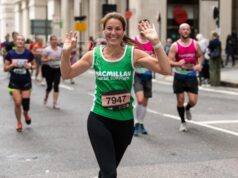
One of the biggest issues Mary has noticed is the gap between the women she sees at her running club and parkrun, and the women who tend to appear in running brand campaigns.
“The runners that I see every week at my running club, at parkrun, we are all different shapes and sizes, from all different backgrounds, all different walks of life.”
She doesn’t think the industry has caught up with that reality.
Mary remembers how different her experience of buying kit was depending on her size. During her running life, her weight has fluctuated between a size 10 and a size 18, and she noticed that the availability of kit reduced as her size increased: “Many brands stop at a 14 or a 16. They don’t go above that.”
She’s also spent years helping beginners at her local running club, meeting women of all shapes and sizes who are just starting out or returning to exercise.
For someone who has discovered running and wants to buy some kit, not being able to find their size can be a real barrier.
Mary believes representation matters too. If women only see young, slim runners wearing crop tops and short shorts in advertising, they may wonder whether they belong: “If you’re constantly seeing size 8 women who are in their 20s wearing the little crop tops and the little short shorts, I just sink back into myself because I think, I can’t look like that.”
Mary has also seen assumptions around what makes someone a ‘proper’ trail runner.
At one point, she felt the message was that you could be older, but if you weren’t running huge distances, were you really a trail runner?
“Wherever you go there’s artificial barriers created for people that I think we can put in the bin.”
Running kit: comfort before fashion
Mary is uncomfortable with the way running kit has increasingly become part of the running aesthetic, particularly in trail running.
She joked that UTMB can feel like ‘fashion week’, but her own priorities when choosing what to wear are much simpler:
“When I run, the most important thing is that the kit that I’m wearing is comfortable and it’s functional. It has all of the features that I need so that I can carry what I need to carry.”
Ideally, she says, you shouldn’t even notice you’re wearing it.
She isn’t against wanting to look good or feel confident in your kit, but worries that the fashion side of running clothing can lead to more frequent changes and more waste.
“I want to create kit that’s going to last years and years and years. That’s a sort of classic design so that you can wear it with whatever.”
Asking women what they actually want
Mary’s own frustrations with running kit, alongside what she’d seen through her work in the industry, eventually led her to consider starting her own brand.
Before investing in stock and developing products, she wanted to check that other women felt the same way. She ran three surveys over a few months, asking women what wasn’t working with their existing kit. The results helped shape the first products.
When asked what mattered most when buying running kit, Mary expected answers such as style or price. Instead, the top priority was clear: “The number one thing was fit and comfort.”
Shorts were the product women complained about most. The problems were familiar to many runners: not enough pockets, waistbands that roll down, legs that ride up, inner-thigh chafing and limited size ranges.
Mary was particularly determined to avoid one design feature: the front seam. A front seam is cheaper to manufacture, but this wasn’t something she was prepared to compromise on.
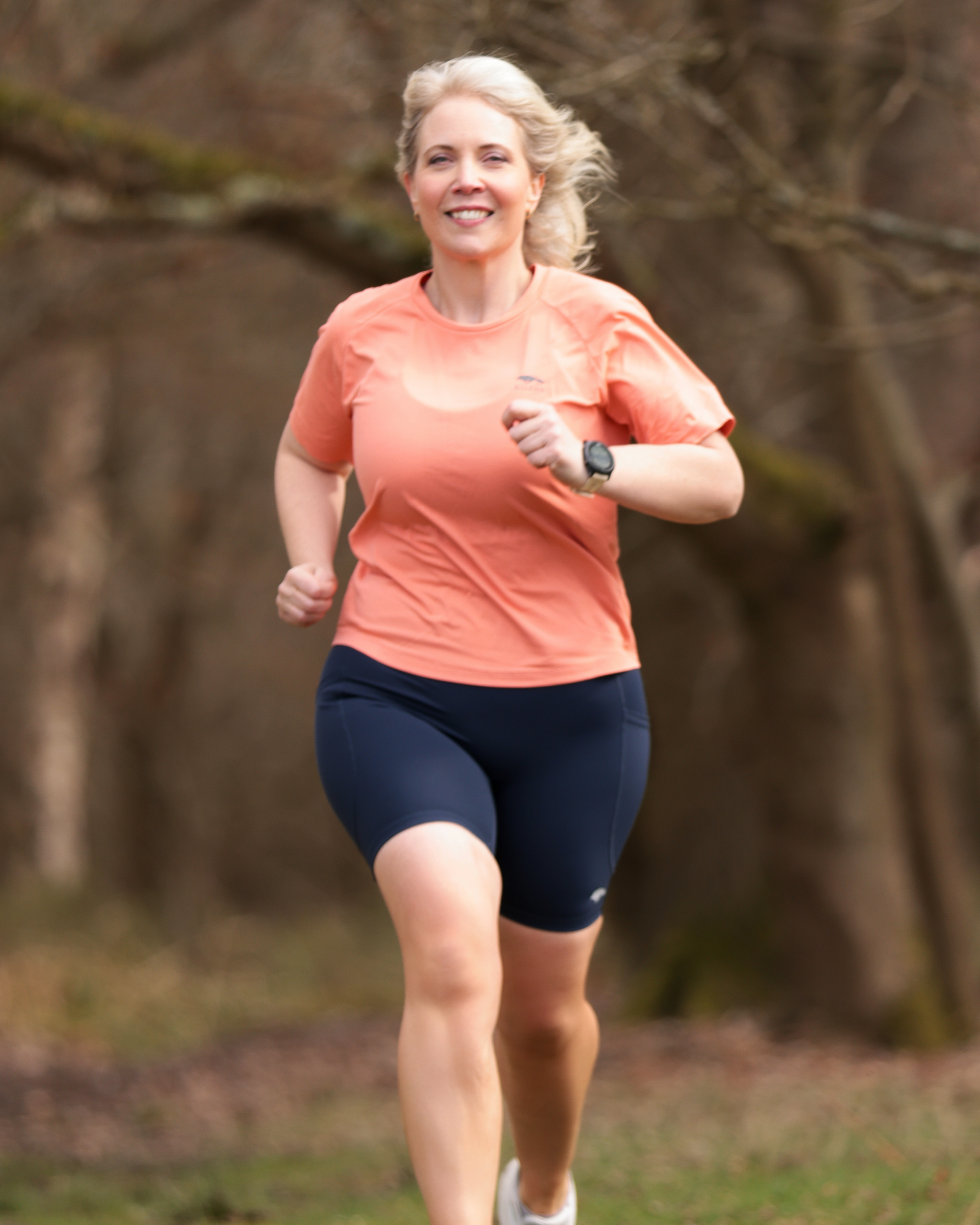
The feedback also influenced the practical details of the KitFox shorts, including two side pockets and a zipped pocket at the back. Mary deliberately avoided adding extra storage around the waistband after women told her they didn’t want additional bulk around their middle.
It was a good example of why she wanted to ask women first, rather than assume she knew what they wanted.
Women are still ambitious runners in midlife
There’s sometimes an assumption that runners become less ambitious as they get older. Mary doesn’t agree: “Not at all. Oh my goodness. I mean, I’ve got so many ambitions.”
She believes that for many women, their 40s and 50s can be a time when they have more freedom to rediscover what they want to do for themselves.
As children get older and life changes, running and other sporting challenges can become a bigger part of their lives again.
She does think it’s important to understand how to train and fuel your body as it changes, but doesn’t believe age should mean lowering your ambitions.
She also raises a note of caution around the way ultra running is sometimes presented on social media. Seeing influencers take on huge distances can make it look straightforward, but Mary worries that the time commitment, training and recovery involved aren’t always given enough attention.
Her point isn’t that people shouldn’t have big goals, but that they should understand what they’re taking on rather than being swept along by what they see online.
The importance of running community
For Mary, KitFox is about more than selling running clothes. Running has been a huge part of her own life, including helping her through some difficult years.
She tells us how her running friends supported her through a divorce and how much she has enjoyed helping other women discover running.
“The whole reason that I’m doing this is because I’m so, I love running so much. And this community has done so much for me, so much for my mental health.”
Her advice to women who feel overlooked or unsure whether they belong is to find other people to run with.
Having a group around you makes it easier to get out for a run, but it also gives you people who understand what you’re talking about and can support you along the way.
She also wants women to share their running stories more widely, particularly on social media.
“There may be somebody else who wants to start but thinks they’re too old. And if we’re not sharing what we’re doing and telling our stories, then other women who might have been inspired to start might not.”
Her final message is simple: “Get out there. Let’s take over the algorithm. Girls, we can do it.”
Listen to the full episode with Mary Johnson from KitFox here.
You can read our review of the KitFox Shorts here.
You can find out more about KitFox at www.runkitfox.com